November 21, 2025
Truck transport
Health and Safety rules during truck loading and unloading

Loading docks are high-risk zones where the intense flow of people, forklifts, and heavy loads requires iron discipline. It is not just about adhering to regulations. Following these rules primarily serves to minimize the risk of accidents and damage to cargo.
In logistics, safety rules are based on a two-pronged approach: universal legal provisions and detailed, internal procedures tailored to the specific nature of the company.
When creating Health and Safety rules, the following should be considered:
- Labour Code: Imposes a general obligation on the employer to ensure safe working conditions and training.
- Transport Law: Determines the responsibility of the consignor/consignee for the proper execution of loading/unloading activities, guaranteeing safe transport.
- Specific Regulations: Specify requirements for equipment use (e.g., forklifts), storage, and zone marking.
- Own Procedures: Every company must create its own precise Health and Safety instructions and procedures. Elements such as warehouse infrastructure and cargo specifics must be taken into account.
In this article, we present example rules that may be included in the Health and Safety Instruction for Loading and Unloading.
Vehicle preparation and securing
- Vehicle Securing: Before a forklift operator enters the trailer or any movement of cargo begins, the vehicle must be fully secured.
- Correct Docking: The driver must approach the ramp in accordance with the designated lines and instructions.
- Absolute Immobilization: After the vehicle is positioned at the transshipment point, the driver is obliged to switch off the engine, engage the handbrake, and use wheel chocks (on both sides of the vehicle) to prevent the truck from rolling away or shifting uncontrollably.
- Warning Cone: In many facilities, a procedure is used to place a warning cone in front of the ramp. This signals to operators that the vehicle is secured and ready for work.
- Technical Condition of the Trailer: Before loading, ensure that the trailer is clean, technically sound, and equipped with the appropriate gear for securing the cargo (e.g., straps, anti-slip mats, shoring bars) – straps must be certified and undamaged.
The driver’s role during loading and unloading
- Safe Waiting Area: The driver must remain in a designated, safe area, away from the forklift work zone and cargo movement. The minimum safe zone is usually 2 meters from the vehicle and equipment.
- Prohibition from Being on the Trailer: The driver is not allowed to be on or near the trailer during the operation of transshipment equipment unless explicitly required by the instructions and safe access is provided (e.g., using a movable working platform for securing straps).
- Communication: The driver informs the forklift operator when the vehicle is ready for loading/unloading and is obliged to comply with the operator’s instructions regarding safety on the premises.
- Use of Movable Working Platform: When securing cargo in an open yard, the driver is obliged to use a movable working platform to avoid the dangerous practice of climbing onto the goods or scaling the trailer structure.

Regulations concerning cargo and equipment
- Cargo Inspection: Unloading should not commence if the condition of the cargo could pose a risk to employee safety. The driver should refuse to accept the cargo if its condition does not meet requirements.
- Open Trailer Doors: The retaining strap may only be removed from the transport unit doors after ensuring there is no risk of the doors bursting open or the goods falling out (e.g., supported cargo).
- Responsibility for Loading Activities: According to the Transport Law, loading activities fall under the responsibility of the consignor (loading) or the consignee (unloading), respectively, unless the contract states otherwise. They are responsible for performing these activities in a manner that ensures safe transport.
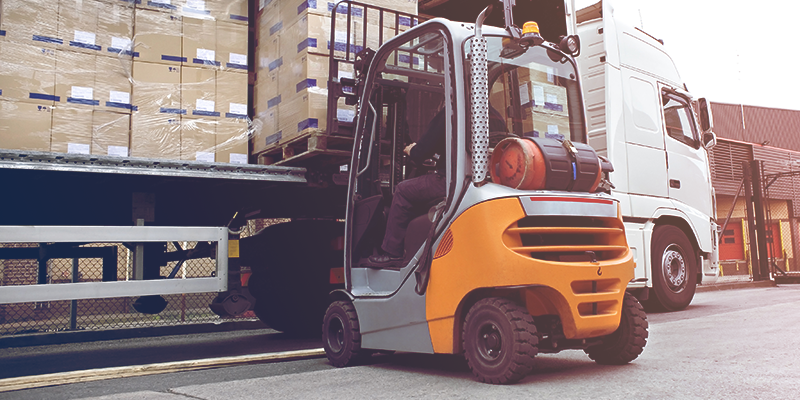
- Loading Equipment: Forklift operation and other equipment must be carried out in accordance with the manufacturer’s instructions, by authorized and trained operators. Exceeding the permissible load capacity of the equipment is prohibited.
Organization of the transshipment zone
- Personal Protective Equipment (PPE): Employees and drivers involved in loading/unloading must wear safety footwear, reflective clothing (vests or jackets), and in some zones, helmets.
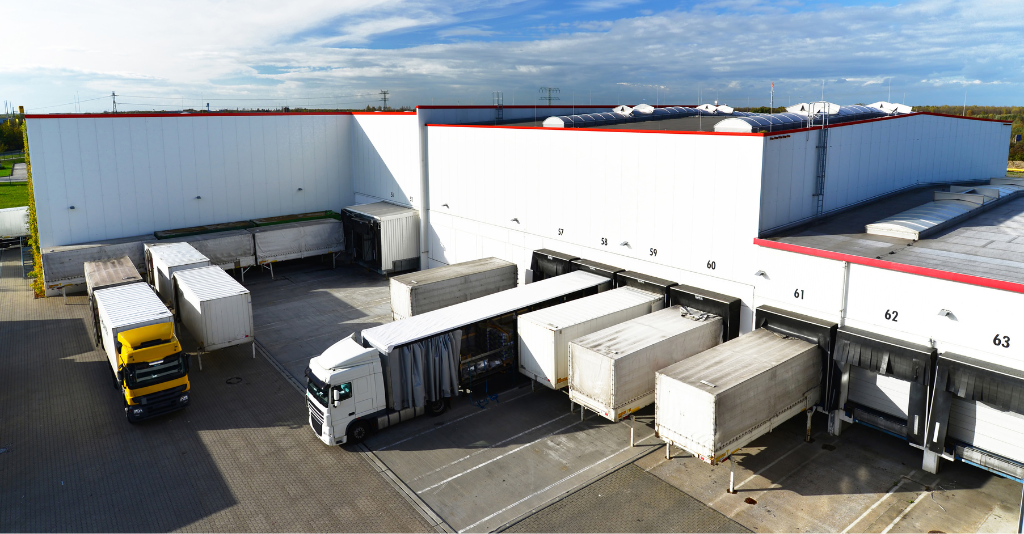
- Markings and Hazard Zones: The hazard zone must be clearly marked (e.g., with tapes, warning signs), and unauthorized persons are prohibited from entering it. Forklift routes must be clearly separated from pedestrian walkways.
- Supervision: Every transshipment process should be coordinated and supervised by a designated person (e.g., a warehouse employee/foreman) who responds to potential hazards.
Health and Safety during truck loading and unloading is not a set of loose recommendations but a system of procedures based on law. Implementing clear and consistent rules minimizes the risk of accidents, and consequently – downtime, loss of goods, and claim-related costs. Safe logistics is more efficient logistics.