July 11, 2025
Containers
How many pallets fit in a 20′ container and other standard sizes?

When planning goods transport, you might wonder how many pallets fit in a 20′ container or a 40′ container. Choosing the right loading unit allows for effective space utilization and thus cost optimization. In this article, we will examine the capacity of the most popular sea containers.
Sea container – how many pallets can it accommodate?
| Container type | Internal length [cm] | Internal width [cm] | Internal height [cm] | Number of Euro Pallets (120×80 cm) | See how to arrange |
|---|---|---|---|---|---|
| 20-foot DC (Dry Cargo) | 589.8 | 237 | 238.5 | 11 | Check out |
| 20-foot HC (High Cube) | 589.8 | 235 | 269.5 | 11 | Check out |
| 40-foot DC (Dry Cargo) | 1203.2 | 237 | 238.5 | 25 | Check out |
| 40-foot HC (High Cube) | 1203.2 | 237 | 269 | 25 | Check out |
| 45-foot HC (High Cube) | 1355.3 | 242.6 | 269.4 | 33 | Check out |
Important notes:
- Remember that even containers of the same type may have minimal differences in dimensions. To avoid loading problems, always check the actual dimensions of the container to be used before starting operations.
- The final number of pallets in a container depends on their arrangement, any protruding load elements, the need to maintain space between pallets, or additional securing measures.
- Remember that even if the maximum number of pallets fits, their total weight must not exceed the permissible load capacity of the container.
- Pay attention to the arrangement of pallets in the container; they should be arranged to maintain the center of gravity.
How many pallets fit in a 20′ container and how to arrange them, check in Goodloading planner
Knowing how many pallets fit in a container is one thing, but their effective arrangement is quite another. Manual loading planning in a sea container, especially when goods have varied dimensions or require specific transport conditions or arrangement, can be a significant challenge. This is where the Goodloading planner comes in handy.
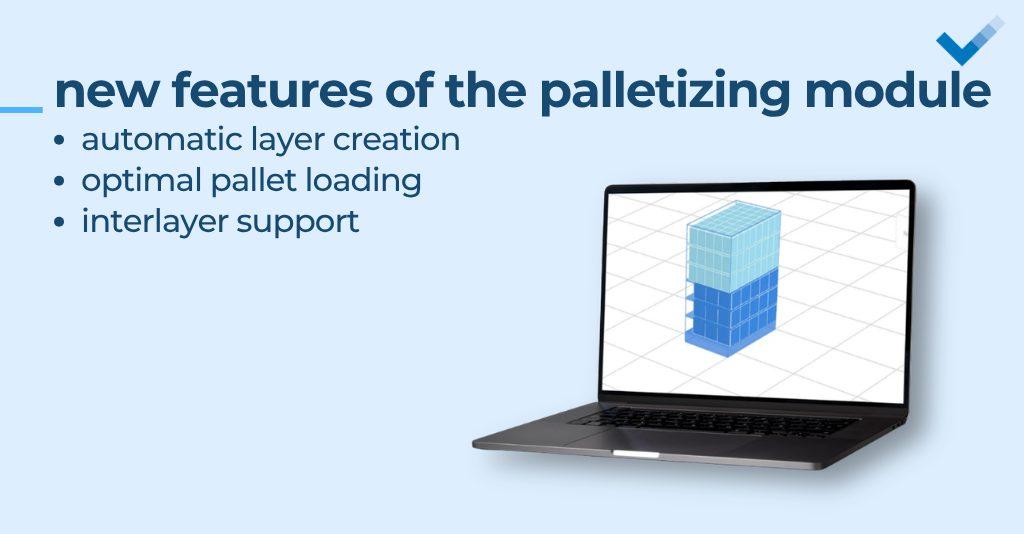
The planner calculates the optimal arrangement of pallets in a container and shows the arrangement method in a 3D visualization. Thanks to it, you can precisely check how many pallets fit in a 40′ or 20′ container and minimize empty spaces.
Check out our article on using Goodloading in sea transport: Container transport – use cases: consolidation and deconsolidation.
How does Goodloading work? Simply indicate the container you plan to load, then add the pallets to the loading list. Goodloading will immediately suggest the most optimal arrangement of the load inside the container. If, in addition to pallets, you want to load goods in other packaging, simply enter them into the system – the application will handle the diversity of loads. Goodloading also offers a palletization option, meaning you can first arrange goods on pallets and only then place them in the container. If you know that your goods can be stacked, select the stacking option, and the program will take this into account in the proposed visualization.
Goodloading not only visualizes loading but also actively supports you in the process. If any of the goods do not fit in a given space, the program will immediately inform you. What’s more, you have complete freedom to modify – if the proposed design does not suit your preferences, you can manually move the loads on the visualization. This allows you to precisely check how many pallets fit in a container, optimize space utilization, and ensure safe transport.
Do you need help planning your pallet loading? Visit Goodloading.com and test the loading planner.