June 18, 2026
Shippers
LTL transport – what is it, how to manage it and how to plan less than truckload loading?
Sending vehicles that are not fully loaded generates financial losses. When the volume of goods does not allow the entire trailer space to be filled, LTL transport, or less than truckload transport, becomes the standard. However, effective organization of this process requires mathematical precision, appropriate IT tools and an understanding of the specifics of consolidation.
LTL – what does it mean in logistics?
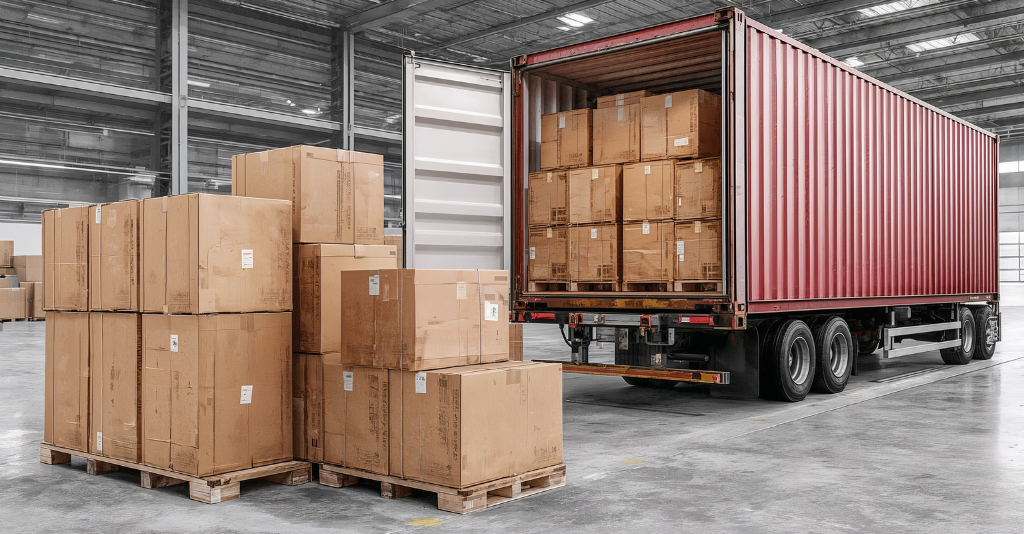
The abbreviation LTL comes from English – Less Than Truckload. It is a less than truckload transport in which a single truck carries goods from many different shippers to many different recipients. The loading space is shared between individual shipments.
In the LTL formula, the transport fee is calculated based on the actual space occupied – most often converted into pallets or linear meters of the trailer (LDM) – and the gross weight of the goods. This is the opposite of the FTL (Full Truckload) model, where the customer books the entire vehicle exclusively and pays for full transport, regardless of the degree of loading.
Where does the popularity of LTL operations come from?
The growing importance of less than truckload transport is a direct result of changes in supply chains. The pressure to reduce warehouse inventories and the development of e-commerce force companies to send smaller batches of goods but with greater frequency.
Instead of waiting to collect an order for a whole vehicle, companies send goods on an ongoing basis. According to Eurostat data, road transport of goods in the European Union is largely based on less than truckload transport and this segment is constantly growing due to the fragmentation of orders.

Main advantages of less than truckload transport:
- Optimization of operating costs: The sender does not bear the cost of empty trailer space – he pays only for the space physically occupied by his pallet.
- Greater financial liquidity: Companies do not have to freeze capital in large batches of goods in the warehouse, waiting to collect a full truckload order.
- Operational flexibility: The ability to send single pallets allows you to respond to market demand on an ongoing basis and deliver in the Just-in-Time formula.
The main challenge in this model is the delivery time. In LTL transport, this time is usually longer by 24-48 hours compared to FTL, because the goods have to go through reloading processes in logistics hubs.
How to effectively manage less than truckload?
Managing less than truckload in the LTL model requires precise coordination at every stage – from the first mile to final delivery. This process is based on three main operational pillars:
- Hybrid collection and consolidation model (Cross-docking): In the classical approach, the process begins with the collection stage, where smaller vehicles collect single pallets from several shippers in a given region. The goods go to a regional transshipment warehouse, where they are immediately sorted in the cross-docking system and loaded onto large vehicles going in a specific direction. This allows maximum use of the loading space of long-distance trailers. In the case of larger batches (e.g. over 5-8 pallets), a direct model (loading from the wheel) is used, bypassing the transshipment warehouse to shorten the delivery time.
- Process automation through TMS systems: The TMS transport management system automatically aggregates orders with LTL status, taking into account postal codes and delivery dates. The system’s algorithms help forwarders combine loads from different customers into a single transport task, plan optimal multi-point routes and monitor the status of shipments in real time.
- Flexibility to the diversity of load units: Classic LTL transport aims at standardization and relying solely on euro pallets with dimensions of 1200×800 mm. This is because goods with non-standard dimensions make manual space planning difficult and increase the risk of free space. Carriers often impose additional freight charges for them. However, more and more companies are opting for advanced planners such as Goodloading, which, instead of rejecting non-standard orders or accepting space losses, allow them to treat size diversity as a market advantage. Digital tools can match loads of different sizes in just a few seconds.
Goodloading – a loading planning program and LTL optimization
The biggest problem in organizing less than truckload transport is the risk of human error when planning the placement of goods of different sizes and weights. Suboptimal pallet placement results in unused space that still has to be paid for. The solution to this problem may be the use of Goodloading.
How does the program help with LTL loading?
- Maximum space optimization: The program uses advanced mathematical algorithms to optimally distribute goods on the trailer. The system analyzes free spaces and adjusts loads to minimize “carrying air”, which directly increases freight profitability.
- Support for multi-point routes (Multistops): This is a key function for LTL. When planning the arrangement of goods, the program takes into account the order of loading and unloading places on the route. This prevents situations where goods intended for the first drop are blocked at the front of the trailer by loads dedicated to subsequent recipients.
- Setting the algorithm according to the order of adding: By activating the loading function according to the order of adding shipments, you can be sure that all loads from one sender or dedicated to one customer will be placed “together”, next to each other.
- Advanced stacking functions: Goodloading allows advanced definition of parameters for stacking goods on top of each other. You can specify the maximum weight that can press on the bottom pallet, limit stacking to specific types of packaging, or completely block it for fragile items.
- 3D visualization and instant project sharing: The finished loading plan is generated in the form of an interactive three-dimensional model. The forwarder does not have to personally supervise work in the warehouse – it is enough to export the project to a PDF file or send a direct link to the person responsible for physical loading. The warehouse worker receives precise step-by-step instructions, which eliminates decision-making errors and shortens the time of logistics operations by several dozen percent.
The use of systems such as Goodloading in combination with TMS and WMS class systems shortens transport planning time by several dozen percent and eliminates errors on loading ramps, which directly translates into higher operational efficiency.
Try Goodloading: https://app.goodloading.com/en/auth/register